Can I Sue the Police in Florida?
Yes. In some situations, you may be able to sue the police, a sheriff’s office, a city police department, a county agency, or individual officers if your rights were violated or you were injured because of unlawful police conduct. However, suing law enforcement is not the same as filing a regular personal injury claim. Police misconduct cases can involve constitutional law, civil rights claims, sovereign immunity, strict deadlines, government notice requirements, body camera evidence, police reports, internal affairs records, and complex defenses.
If you believe you were wrongfully arrested, illegally searched, injured by excessive force, falsely accused, or mistreated by law enforcement in Fort Myers, Lee County, Naples, Cape Coral, Punta Gorda, Hendry County, Sarasota County, or elsewhere in South Florida, you should speak with an attorney as quickly as possible.
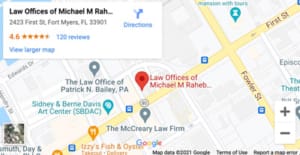
The Law Offices of Michael M. Raheb, P.A. handles criminal defense, injury, family law, and immigration matters, and the firm’s website emphasizes protecting clients’ rights, including the right not to speak to police and the right to have a lawyer present during questioning. The firm offers a free 30-minute phone consultation, lists 30 years of experience, personal attention on every case, payment plans, and a Fort Myers office at 2423 First Street, Fort Myers, FL 33901.
When Can You Sue the Police?
You may have a claim against the police if an officer or law enforcement agency violated your constitutional rights, used unlawful force, made an illegal arrest, conducted an improper search, caused physical injuries, damaged your property, or abused legal authority.
Common police misconduct claims may involve:
Wrongful arrest
False imprisonment
Excessive force
Unlawful search and seizure
Malicious prosecution
Illegal traffic stop
Improper DUI investigation
Fabricated evidence
Coerced confession
Retaliation for exercising free speech rights
Racial profiling or discriminatory enforcement
Failure to provide medical care while in custody
Wrongful death involving police conduct
Property damage during a search or arrest
Civil rights violations under federal law
A police officer does not automatically violate the law simply because an arrest occurred, force was used, or charges were filed. The key question is whether the officer acted unlawfully under the facts of the case.

Can I Sue the Police for Violating My Constitutional Rights?
Yes. Many police misconduct lawsuits are brought under 42 U.S.C. § 1983, a federal civil rights law that allows a person to sue when someone acting “under color of” state law deprives them of rights protected by the U.S. Constitution or federal law.
In plain English, this means that if a police officer, deputy sheriff, or other government official uses the authority of the government to violate your constitutional rights, you may be able to bring a civil rights lawsuit.
These claims often involve rights protected by the:
Fourth Amendment — protection against unreasonable searches, seizures, arrests, and excessive force.
Fifth Amendment — protection against compelled self-incrimination in certain contexts.
Sixth Amendment — right to counsel in criminal prosecutions.
Fourteenth Amendment — due process and equal protection rights.
For example, if officers arrested you without probable cause, entered your home without a valid warrant or legal exception, used unreasonable force during an arrest, or ignored a serious medical need while you were detained, those facts may support a civil rights claim.
Can I Sue the Police for Wrongful Arrest?
Yes, but not every arrest that ends in dropped charges is automatically a wrongful arrest lawsuit. To sue for wrongful arrest or false arrest, you generally need to show that police lacked probable cause or legal authority to arrest you.
Probable cause means the facts known to the officer at the time would lead a reasonable officer to believe that a crime had been committed and that you committed it. If police arrested you based on a hunch, unreliable information, false statements, racial profiling, or evidence obtained through an illegal stop, your arrest may be challenged.
This issue can matter in both criminal defense and civil rights litigation. The Michael Raheb website discusses how drivers are protected against unreasonable traffic stops and notes that police must have reasonable suspicion before administering certain tests in DUI investigations. If police do not establish the necessary suspicion, evidence from the stop may be challenged.
Can I Sue the Police for Excessive Force?
Yes. You may be able to sue if police used more force than was reasonably necessary under the circumstances. Excessive force cases are highly fact-specific. Courts often look at:
The seriousness of the alleged offense
Whether the person posed an immediate threat
Whether the person was resisting or attempting to flee
Whether the person was already handcuffed or restrained
Whether weapons were involved
Whether officers gave warnings or commands
The extent of the injuries
Whether body camera, dash camera, surveillance video, or witness testimony supports the claim
Examples of potential excessive force may include punching, choking, tasing, shooting, slamming, kneeling on someone, using a police dog, or violently restraining someone when the level of force was not justified.
A case may be stronger when the person was already handcuffed, not resisting, unarmed, injured, compliant, or clearly unable to follow commands.
Can I Sue the Police for an Illegal Search?
Yes. Police generally need a valid warrant, consent, probable cause, or a recognized legal exception before searching your home, vehicle, phone, backpack, or personal property. If officers searched you or your property unlawfully, there may be two possible consequences.
First, in a criminal case, your attorney may file a motion to suppress the evidence. If successful, the prosecution may not be able to use illegally obtained evidence against you.
Second, in some cases, an illegal search may support a civil rights lawsuit.
However, unlawful search claims can be difficult because police often argue that an exception applied, such as consent, search incident to arrest, plain view, automobile exception, exigent circumstances, inventory search, or officer safety concerns.
Can I Sue the Police If My Criminal Charges Were Dropped?
Possibly. Dropped charges can help your case, but they do not automatically prove police misconduct.
You may have a stronger claim if the charges were dropped because:
The arrest lacked probable cause
Evidence was suppressed
Police reports contained false statements
Witnesses contradicted the officer’s version
Video showed the officer was wrong
The prosecution determined the case could not be proven
The officer violated your rights during the stop, search, arrest, or interrogation
However, if police had probable cause at the time of arrest, the fact that charges were later dismissed may not be enough by itself to sue successfully.
Timing is also critical. The U.S. Supreme Court has held that the statute of limitations for certain false arrest claims may begin when the person becomes detained pursuant to legal process, not necessarily when criminal charges are later dismissed.
Can I Sue the Police for Malicious Prosecution?
Yes, in certain cases. Malicious prosecution claims may apply when police or prosecutors wrongfully pursued criminal charges without probable cause and with improper motive, and the case ended in your favor.
These claims may involve:
False police reports
Fabricated evidence
Withheld evidence
Pressure on witnesses
Misleading statements to prosecutors
Charges filed despite lack of probable cause
Continuation of prosecution after officers knew the case was false
Malicious prosecution is different from false arrest. False arrest usually focuses on the legality of the initial arrest. Malicious prosecution focuses on the wrongful continuation or initiation of criminal proceedings.
Can I Sue the Police Department Directly?
Sometimes. Depending on the facts, possible defendants may include:
The individual officer
The sheriff
The city
The county
The police department
The sheriff’s office
A jail or detention agency
Other government employees involved in the incident
However, suing the “police department” itself may not always be the correct legal route. In some cases, the proper defendant may be the city, county, sheriff in an official capacity, or the individual officers. This is one reason police misconduct cases should be reviewed carefully before filing.
Can I Sue the City or County for Police Misconduct?
Yes, but there are limits. Under Florida law, the state and its agencies or subdivisions waive sovereign immunity for certain tort claims, but only to the extent specified by statute. Florida’s sovereign immunity statute applies to claims for injury, loss of property, personal injury, or death caused by negligent or wrongful acts of government employees acting within the scope of employment, subject to statutory limitations.
This means you may be able to sue a city, county, or government agency, but the case may be subject to special notice rules, damage limitations, and procedural requirements.
Florida’s sovereign immunity law includes counties and municipalities within the definition of state agencies or subdivisions.
What Is Sovereign Immunity?
Sovereign immunity is a legal doctrine that protects government entities from being sued unless the government has agreed to allow certain lawsuits. Florida does allow some claims against government agencies, but the rules are strict.
In a police misconduct case, sovereign immunity can affect:
Who you can sue
Whether the government agency can be held liable
How much money can be recovered
Whether pre-suit notice is required
Whether the officer acted within the scope of employment
Whether intentional misconduct is covered
Whether the claim belongs in state court, federal court, or both
Because of these rules, it is important to act quickly and identify the correct defendants.

How Long Do I Have to Sue the Police in Florida?
Deadlines depend on the type of claim.
Florida law provides a four-year statute of limitations for several intentional torts, including assault, battery, false arrest, malicious prosecution, false imprisonment, and other intentional torts.
Florida law also provides a two-year statute of limitations for negligence claims and wrongful death claims.
Federal civil rights claims under Section 1983 often borrow the state’s personal injury limitations period, but the accrual date—when the clock starts running—can be controlled by federal law. That means the timing can be more complicated than simply counting from the date charges were dismissed.
Do not wait. Evidence in police cases can disappear quickly, including body camera footage, dash camera footage, dispatch audio, jail video, 911 calls, surveillance video, booking photos, medical records, and witness memories.
What Should I Do Immediately After Police Misconduct?
If you believe police violated your rights, take the following steps as soon as possible:
Write down everything you remember. Include date, time, location, officer names, badge numbers, patrol car numbers, agency names, witnesses, injuries, statements made by officers, and anything you said.
Take photos of injuries. Photograph bruises, cuts, swelling, torn clothing, damaged property, handcuff marks, taser marks, or other visible evidence.
Get medical treatment. Medical records can be critical in excessive force, jail injury, and wrongful detention cases.
Save videos and messages. Preserve phone videos, security footage, Ring camera clips, social media posts, text messages, voicemails, and emails.
Identify witnesses. Get names, phone numbers, addresses, and written statements if possible.
Do not post about the case online. Anything you say publicly may be used against you.
Request records carefully. Police reports, body camera footage, dash camera footage, 911 audio, dispatch logs, arrest affidavits, and jail records may be important.
Speak with an attorney before giving additional statements. The Michael Raheb website advises that people facing criminal charges are not required to speak to police and have the right to a lawyer before questioning.
What Evidence Can Help a Police Misconduct Lawsuit?
Strong evidence may include:
Body camera video
Dash camera video
Cell phone video
Surveillance footage
911 calls
Dispatch audio
CAD reports
Arrest reports
Probable cause affidavits
Use-of-force reports
Internal affairs complaints
Witness statements
Medical records
Photographs of injuries
Booking records
Jail medical records
Expert testimony
Prior complaints against the officer
GPS or location data
Text messages or emails
Court records from the criminal case
Video evidence is especially important because police reports may not tell the whole story. A lawyer can work to preserve and obtain evidence before it is deleted or overwritten.
Can I Sue If Police Lied in the Report?
Possibly. A false or misleading police report may support a claim if it caused harm, such as wrongful arrest, prosecution, detention, loss of employment, reputational damage, or violation of constitutional rights.
Important questions include:
Did the officer knowingly make false statements?
Were the false statements material?
Did prosecutors rely on the false statements?
Did the false report lead to arrest or charges?
Is there video or witness evidence disproving the report?
Did the officer omit key facts that changed the meaning of the report?
Minor mistakes may not be enough. But intentional falsehoods, fabricated probable cause, or omitted exculpatory evidence can be serious.
Can I Sue for Being Held in Jail Too Long?
Possibly. Claims involving unlawful detention may arise when someone is held after charges are dismissed, held on the wrong warrant, denied bond improperly, misidentified, detained despite proof of innocence, or denied necessary medical care.
These cases may involve police, jail staff, sheriff’s offices, court clerks, prosecutors, or other agencies. Identifying who caused the unlawful detention is critical.
Can I Sue for Police Retaliation?
Yes, in some cases. Police retaliation claims may involve officers punishing someone for exercising constitutional rights, such as recording police, criticizing police, filing a complaint, refusing consent to search, or engaging in lawful speech.
Examples may include:
Arresting someone because they recorded police
Threatening someone for filing an internal affairs complaint
Using force because a person questioned police conduct
Charging someone with obstruction without legal basis
Targeting a person after they exercised First Amendment rights
These cases often require careful proof of motive and causation.
Can I Sue If Police Damaged My Property?
Possibly. Police property damage claims may involve broken doors, damaged vehicles, destroyed phones, seized cash, damaged business property, broken cameras, or unnecessary destruction during a search.
However, the outcome may depend on whether the police had a valid warrant, whether the damage was reasonably necessary, whether officers acted negligently or intentionally, and whether the agency has immunity defenses.
Can I Sue the Police for Emotional Distress?
Possibly, but emotional distress claims against police can be difficult. Emotional trauma may be part of recoverable damages in some police misconduct cases, especially when supported by medical records, therapy records, witness testimony, or severe facts.
Potential damages may include:
Mental anguish
Anxiety
Depression
Post-traumatic stress
Humiliation
Loss of sleep
Fear of law enforcement
Loss of enjoyment of life
Damage to reputation
Impact on family relationships
The stronger the documentation, the stronger the claim.
What Damages Can I Recover If I Sue the Police?
Depending on the case, damages may include:
Medical bills
Future medical treatment
Lost wages
Loss of earning capacity
Pain and suffering
Emotional distress
Property damage
Loss of liberty
Humiliation
Reputational harm
Attorney’s fees in certain civil rights cases
Punitive damages against individual officers in some cases
Wrongful death damages when police misconduct causes death
Damage limits may apply to certain claims against government entities under Florida law. Federal civil rights claims may involve different damages rules.
Can I Sue the Police and Fight My Criminal Case at the Same Time?
Yes, but you must be careful. If you have pending criminal charges, your criminal defense case usually comes first because anything you say in a civil lawsuit could affect your criminal case.
For example, giving a sworn statement in a civil case while criminal charges are pending may create risks. A criminal defense attorney can help decide whether to challenge evidence, file motions to suppress, attack probable cause, preserve civil claims, and avoid statements that could harm you.
The Law Offices of Michael M. Raheb, P.A. emphasizes that people accused of crimes should understand their rights, avoid speaking to police without counsel, and contact a qualified local attorney early to preserve evidence and build a defense.
What If Police Violated My Rights During a DUI Stop?
DUI stops often involve constitutional issues. Police need a lawful basis for the stop, and they must follow legal rules during detention, field sobriety exercises, breath testing, blood testing, searches, and arrest.
Potential issues include:
No reasonable suspicion for the traffic stop
No probable cause for arrest
Improper field sobriety investigation
Unlawful breath or blood testing
Failure to follow testing procedures
Illegal vehicle search
Improper questioning
Body camera footage contradicting the officer’s report
Medical issues mistaken for impairment
Unlawful extension of the traffic stop
The Michael Raheb website specifically discusses how drivers are protected from unreasonable traffic stops and drunk-driving tests, and that police need reasonable suspicion before administering tests.
Why Police Misconduct Cases Are Difficult
Police misconduct lawsuits are challenging because officers and agencies often raise strong defenses, including:
Probable cause
Reasonable suspicion
Qualified immunity
Sovereign immunity
Good faith mistake
Officer safety
Resistance or flight
Consent
Valid warrant
Exigent circumstances
Lack of damages
Failure to comply with notice requirements
Statute of limitations
Conflicting witness testimony
This does not mean you cannot win. It means the case must be built carefully with evidence, legal analysis, and a clear theory of liability.

Frequently Asked Questions About Suing the Police
Can I sue the police for harassment?
Possibly. Harassment by police may support a claim if it involves unlawful detention, retaliation, discrimination, threats, repeated baseless stops, false arrests, or abuse of authority. General rudeness or disrespect may not be enough by itself.
Can I sue the police for racial profiling?
Yes, if you can prove discriminatory enforcement or unequal treatment. These cases may require evidence showing that race, ethnicity, or another protected factor was a motivating reason for the stop, search, arrest, or treatment.
Can I sue if the police searched my car without permission?
Possibly. Police do not always need permission to search a vehicle, but they do need legal justification. If there was no consent, no probable cause, no valid arrest-related basis, and no other exception, the search may be unlawful.
Can I sue if police entered my home without a warrant?
Possibly. Homes receive strong constitutional protection. Police usually need a warrant or a recognized exception, such as consent, emergency circumstances, hot pursuit, or immediate danger.
Can I sue if police used a taser?
Possibly. A taser may be excessive if used against someone who was not resisting, was already restrained, posed no threat, or was unable to comply.
Can I sue if police handcuffed me too tightly?
Possibly. Tight handcuff claims may be stronger if you complained, officers ignored your complaint, you suffered visible injury or nerve damage, and medical records document the harm.
Can I sue if police arrested me but I was innocent?
Maybe. Innocence alone is not always enough. The legal question is whether police had probable cause at the time of arrest. If they did not, you may have a claim.
Can I sue if police ignored my medical needs in jail?
Possibly. If officers or jail staff knew you had a serious medical need and deliberately ignored it, delayed care, or denied treatment, that may support a civil rights claim.
Can I sue if police took my property and did not return it?
Possibly. You may have remedies if police unlawfully seized property, failed to return property, damaged property, or kept property without proper legal authority.
Should I file an internal affairs complaint?
It depends. An internal affairs complaint may create a record, but it may also generate statements that can affect your criminal or civil case. Speak with an attorney first if criminal charges are pending.
Why Contact The Law Offices of Michael M. Raheb, P.A.?
Police misconduct cases often overlap with criminal defense. If you were arrested, searched, questioned, accused, or injured by law enforcement, you need someone who understands how police conduct affects both the criminal case and any potential civil claim.
The Law Offices of Michael M. Raheb, P.A. offers a free 30-minute phone consultation, lists 30 years of experience, personal attention on every case, payment plans, evening appointments, and 24/7 availability messaging on its website. The firm’s main office phone is 239-226-0888, and its office is located at 2423 First Street, Fort Myers, FL 33901.
Call Now to Protect Your Rights
If you are asking, “Can I sue the police?” the answer may be yes — but you need to act quickly. The strength of your case may depend on body camera footage, police reports, witness statements, medical records, deadlines, and whether your criminal case is still pending.
Call 239-226-0888 to schedule a free 30-minute phone consultation with The Law Offices of Michael M. Raheb, P.A. in Fort Myers.