Probation Violation Consequences in Florida
A probation violation can pull you back into court fast, sometimes into jail even faster. If you are worried about probation violation consequences in Florida, the biggest mistake is assuming the court will give you time to explain later. In many cases, a judge can issue a warrant, revoke bond, and set a violation hearing before you have had a real chance to protect yourself.
Florida courts do not treat probation as a casual second chance. Probation is a court order. If the court believes you broke that order, the consequences can be serious, even when the new problem seems minor. Missing a meeting, failing a drug test, not finishing community service, falling behind on payments, or getting arrested on a new charge can all trigger a violation.
What counts as a probation violation in Florida?
Probation conditions vary from case to case, but the most common requirements are straightforward. You may have to report to your probation officer, stay employed, avoid new arrests, complete treatment, pay fines, perform community service, or remain in a certain county unless you have permission to leave.
Violations usually fall into two categories: technical violations and substantive violations. A technical violation means you broke a rule of supervision without being accused of a new criminal offense. That could include missing an appointment, skipping classes, testing positive for alcohol or drugs, or failing to pay court-ordered costs. A substantive violation usually means the state claims you committed a new crime while on probation.
That distinction matters, but not as much as people think. Even a technical violation can land you in custody and put your freedom at risk. A judge will look at the exact condition, your history on probation, your explanation, and whether the violation appears willful and substantial.
Probation violation consequences in Florida can start immediately
Once a probation officer files an affidavit of violation, the court may issue a warrant for your arrest. That means you can be picked up at home, at work, during a traffic stop, or when you appear in court for something else. In many cases, there is no automatic right to bond on a violation of probation. Some people sit in jail until the judge decides the case.
This is one of the hardest parts for families. They expect a quick release because the original charge may have been nonviolent or because the alleged violation seems small. But a probation violation puts you in a different position than a first arrest. You are now dealing with a claim that you failed to follow a direct court order.
In Lee County and surrounding courts, judges often move quickly on these cases. Waiting to see what happens is risky. Early legal intervention can make a real difference in whether a warrant is addressed proactively, whether the court considers release, and how the case is presented at the violation hearing.
Will you go to jail for violating probation?
Maybe, and that is the honest answer. Some violations are resolved with reinstatement or modified conditions. Others lead to a jail or prison sentence. It depends on the original offense, your prior record, whether the violation was technical or based on a new charge, and how the judge views your conduct.
If the judge finds you violated probation, the court can continue probation, change the terms, extend supervision, order additional conditions, or revoke probation and sentence you on the original case. That last point is where people get blindsided. The court is not limited to a light sanction just because you were originally placed on probation. If probation is revoked, the judge may sentence you up to the maximum allowed by law for the original offense, with credit for time already served where applicable.
How a violation hearing works
A violation hearing is not the same as a regular criminal trial. The state has a lower burden than it would in a new criminal case. Prosecutors do not have to prove the violation beyond a reasonable doubt. Instead, the court decides whether the violation was willful and substantial based on the greater weight of the evidence.
That lower standard gives the state an advantage. Hearsay rules also work differently, although hearsay alone usually cannot be the sole basis for revoking probation. These hearings move fast, and the judge often focuses on narrow questions: Did you violate a condition? Was it willful? Was it substantial?
This is why casual explanations can hurt you. A statement you think sounds reasonable may actually admit the violation. Saying you missed reporting because work got busy, or you skipped treatment because you could not afford it, may not be enough unless the facts are developed carefully and presented the right way.
What if the violation is based on a new arrest?
A new arrest is one of the most dangerous situations for someone on probation. Even if that new case has not been proven, the conduct behind it may still be used in a violation hearing. The probation case and the new criminal case often move on separate tracks.
That creates strategic problems. Fighting the new charge may require silence, while defending the violation may call for evidence or testimony. What helps in one case can damage the other. This is not something to handle without a defense lawyer who understands how both cases interact.
Common penalties after a Florida probation violation
The range of penalties is broad because judges have discretion. In some cases, the court may reinstate probation on the same terms. In others, the court may impose stricter conditions such as more reporting, counseling, curfews, drug treatment, or community service.
The more serious outcomes include a county jail sentence, a prison sentence, or a split sentence with incarceration followed by supervision. For felony probation, a revocation can expose you to years in state prison depending on the original charge. For misdemeanor probation, you may still face significant jail time.
There are also practical consequences outside the courtroom. A probation violation can affect your job, housing, professional licensing, immigration status, and family responsibilities. If you are not a US citizen, any new arrest or sentencing change may create immigration problems beyond the probation case itself.
Can a judge excuse the violation?
Sometimes. Florida law generally requires the violation to be willful and substantial. That means honest mistakes, misunderstandings, or circumstances beyond your control can matter. If you missed payments because you truly lacked the ability to pay, or you missed a meeting because of a documented emergency, those facts may support a defense.
But the court will not take your word for it just because you say it happened. Records, witnesses, treatment documents, employment records, phone logs, transportation issues, hospital paperwork, and proof of later compliance can all matter. The facts have to be organized and presented with care.
There is also a difference between a one-time problem and a pattern. A single missed appointment with quick follow-up may be viewed differently than repeated noncompliance. Judges look for effort, credibility, and whether you took probation seriously before the alleged violation happened.
What to do right now if you think you violated probation
Do not contact your probation officer and start explaining everything without legal advice. Do not assume a missed appointment can be fixed with a phone call. And do not wait for an arrest if you already know a warrant may be coming.
You need to find out whether an affidavit has been filed, whether a warrant exists, what specific condition you are accused of violating, and what evidence the state may use. You also need a strategy before speaking in court. In some cases, the best move is to address the matter quickly and show compliance. In others, the focus should be on challenging whether the alleged violation was willful or substantial at all.
If the situation involves alcohol, driving, or a new DUI arrest, this resource may help you understand the broader issue: https://dui-lawyers.usattorneys.com/florida/
Why local defense matters in a probation case
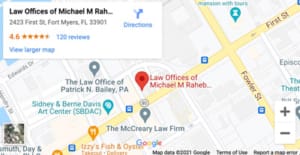
Probation cases are intensely practical. The law matters, but so do the judge, the courtroom process, the prosecutor’s approach, and the local supervision culture. A lawyer familiar with how Fort Myers courts handle violation cases can often spot pressure points that are not obvious from reading a statute.
That may include whether the court is likely to consider reinstatement, how quickly a violation hearing may be set, what documentation will carry weight, and how to avoid statements that create problems in both the violation case and any new criminal case.
At Law Offices of Michael Raheb, the priority is simple: protect your rights early, control the damage, and put the strongest facts in front of the court before the case gets worse. A probation violation is not the moment to hope for leniency without a plan. The right response, made quickly, can change the outcome in a very real way.
If you are facing probation violation consequences in Florida, act before the court acts for you.